


If your organisation can’t exchange production data, right information, or assets with partners in another country tomorrow, how future‑proof is your production infrastructure?
It’s a question many media organisations are quietly circling. Production teams are generating more content, more metadata, and more experimental formats than ever before. Yet much of this value remains trapped in systems that don’t speak to each other. The result is familiar: duplicated work, rising costs, and inefficiencies in workflows that depend on manual fixes .
Across Europe, broadcasters and media organisations are confronting daily this fragmentation. As no single organisation can achieve it alone, they are now exploring how shared, trusted data space can reduce inefficiencies andunlock data value for all . This is the foundation of the Trusted European Media Data Space (TEMS) — not a new platform, but a common layer that connects existing ones.
TEMS provides the building blocks that make collaboration possible at scale: a shared rulebook, a trust and identity framework, interoperable metadata and rights models, and mechanisms for sovereign data exchange. These elements are not abstract. They are the conditions that allow organisations to reuse assets, automate processes, and experiment with new formats without losing control or money.
Recent work within TEMS is already showing what becomes possible when these foundations are in place. Several emerging use cases illustrate how a European media data space can reduce friction and create tangible value across the media sector.
Reusing 3D models for virtual production Broadcasters are increasingly working with 3D environments, volumetric captures, and new formats such as Gaussian splats. Today, these assets are expensive to produce and difficult to reuse. TEMS can support discoverability, rights clarity, and cross‑border reuse of these assets for virtual production— enabling vreatives and media organisations to build on each other’s work rather than starting from scratch.
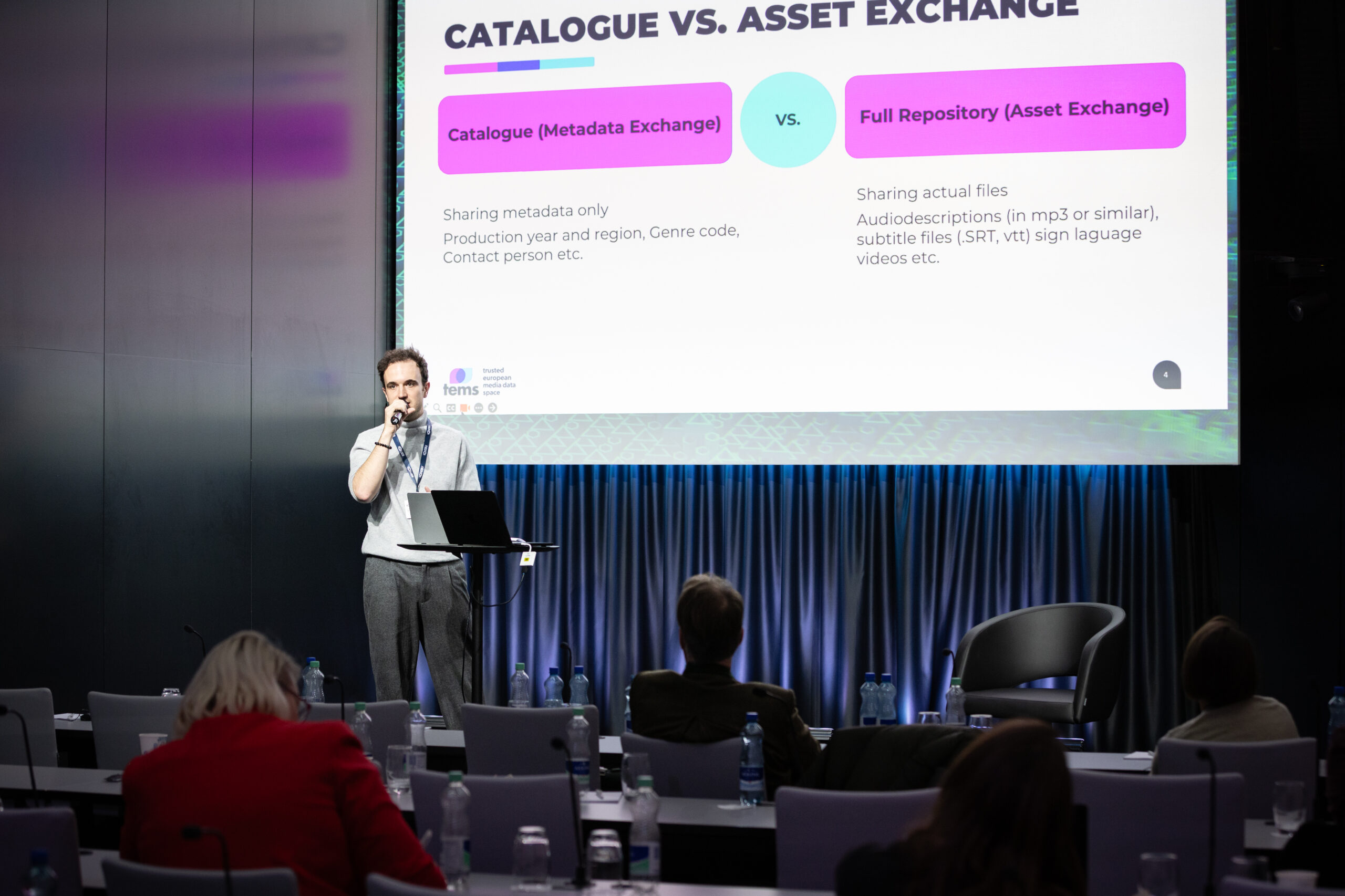
Sharing accessibility assets across organisations Audiodescriptions, subtitles, and sign‑language videos are essential for public service media, yet they are often recreated multiple times for the same content. The Accessibility Repository prototype shows how a federated approach can support full asset exchange, reduce duplication, and ensure accessibility resources flow where they are needed. It also demonstrates a collaborative model where organisations co‑develop solutions while retaining long‑term control.
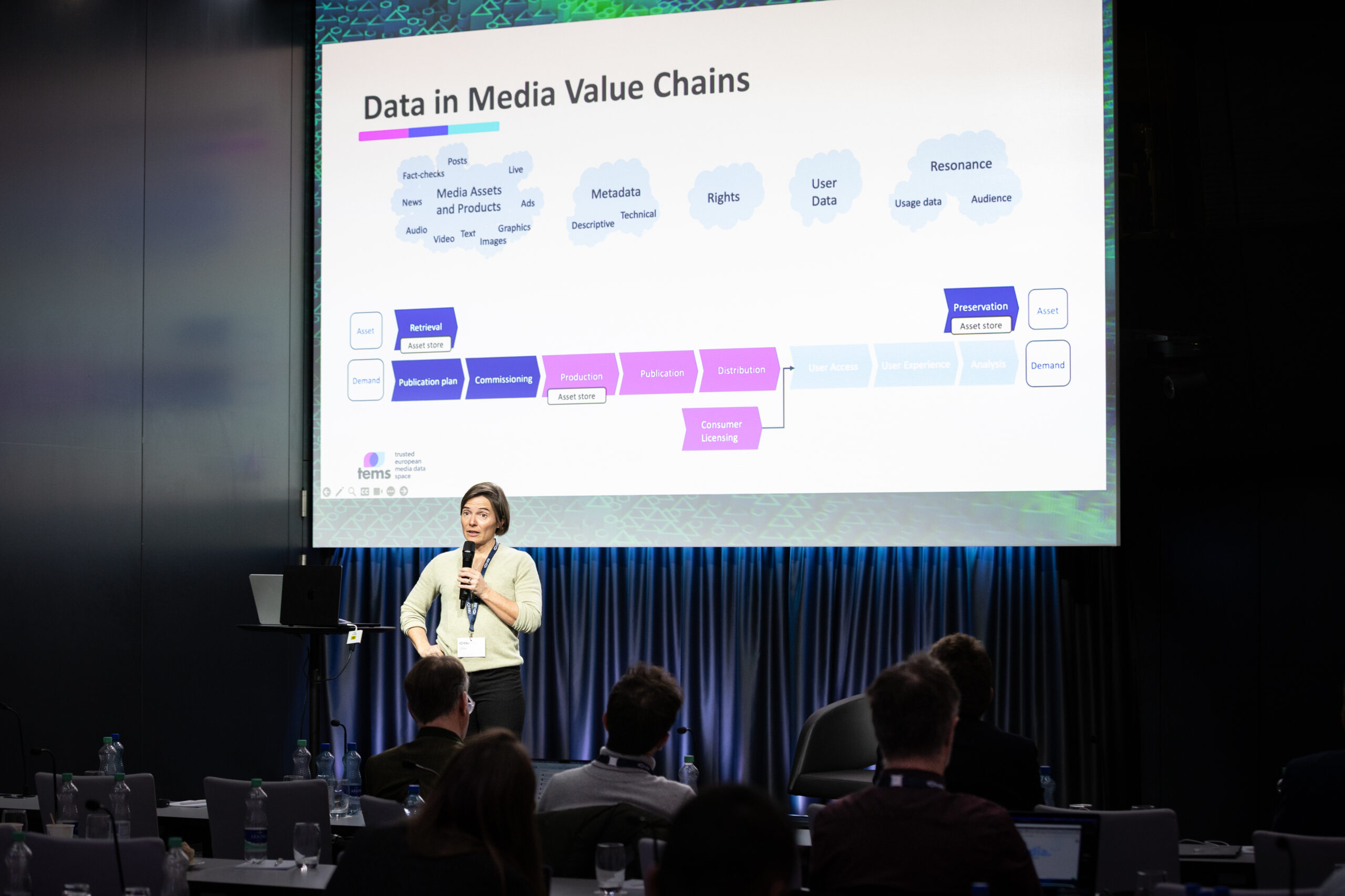
Strengthening metadata, rights, and governance Behind every use case lies the same requirement: consistent metadata, clear Access and usage conditions, and reliable provenance. TEMS provides the governance layer that allows organisations to exchange assets with confidence — knowing how they can be used, by whom, and under what conditions.
These examples point to a simple truth: when data and media assets can move, value can move with it. Shared data space doesn’t replace innovation; it enables it.
Europe doesn’t lack innovation. It lacks interoperability and trust. TEMS is the missing layer that lets our innovations talk to each other.